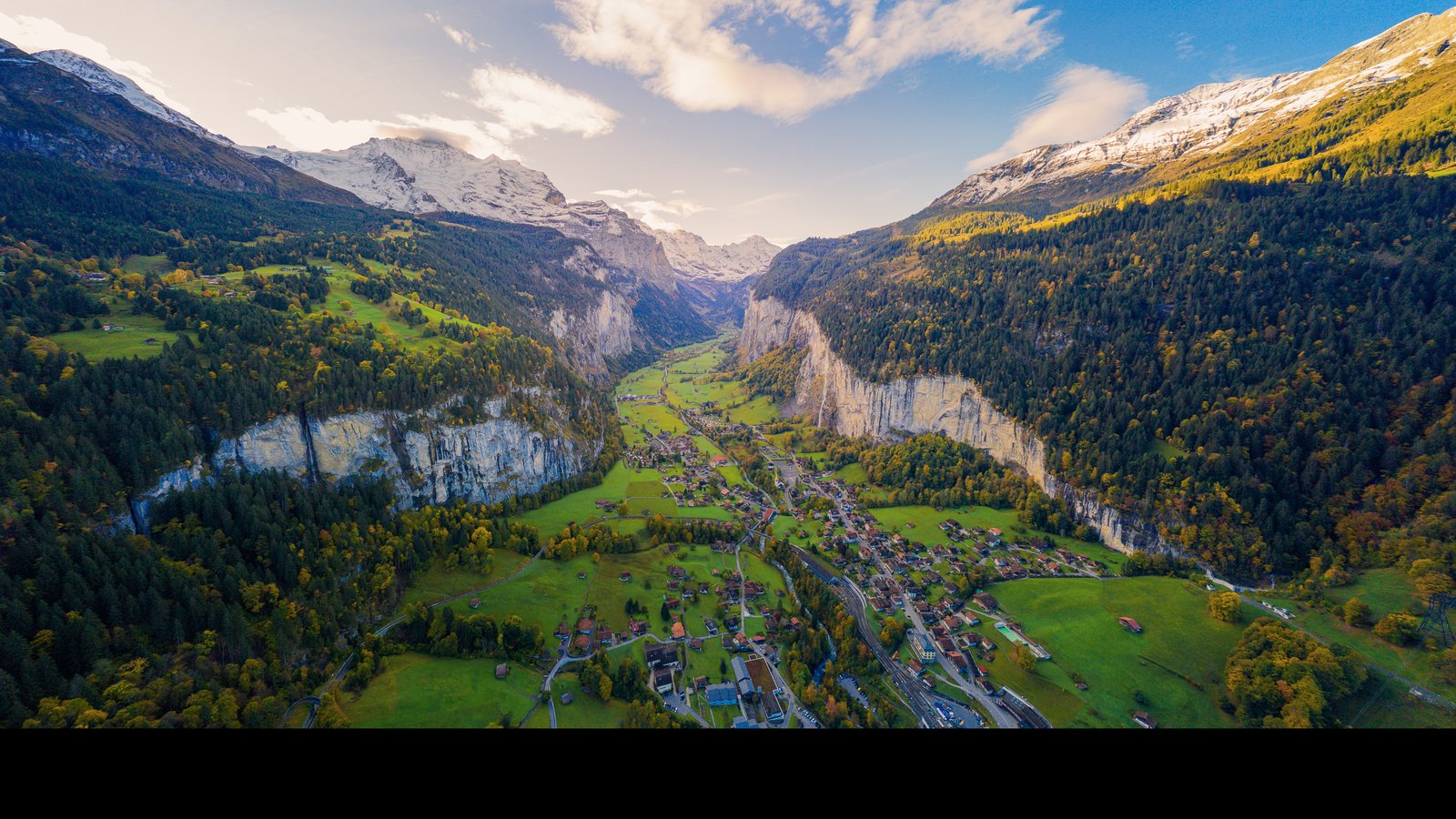
Lauterbrunnen is the kind of place that looks unreal in photos: a deep, green glacial valley with sheer limestone walls on both sides and waterfalls pouring over the edge. It sits in the Bernese Oberland, a short train ride from Interlaken, and it is one of the easiest ways to see the Swiss Alps up close without hiking for hours.
This guide covers what to see, how to get there and around, and how to fit Lauterbrunnen into a first trip to Switzerland.
Note: transport timetables, opening seasons and prices change. Always check the official operator websites before you travel.
Why visit Lauterbrunnen
- The valley itself. The village sits on the valley floor, surrounded by cliffs that rise hundreds of metres. Simply walking through the meadows is the main attraction.
- Waterfalls everywhere. The valley is often described as having around 70 waterfalls, the most famous being Staubbach Falls right next to the village.
- A gateway to the Jungfrau region. From Lauterbrunnen you can reach the car-free villages of Wengen and Mürren, and mountain viewpoints such as the Schilthorn and the Jungfraujoch.
Top things to see and do
1. Staubbach Falls
Staubbach Falls drops from the cliff edge almost straight into the village and is visible from much of the valley floor. It is one of the highest free-falling waterfalls in Switzerland. In summer, a short path leads up behind the falls; access depends on season and conditions.
2. Trümmelbach Falls
A few kilometres further up the valley, Trümmelbach Falls are glacier waterfalls that thunder inside the mountain. A tunnel lift and walkways take visitors up through the gorges. They carry meltwater from the glaciers of the Eiger, Mönch and Jungfrau, so they are most powerful in early summer. The site is seasonal and closed in winter, and there is an entrance fee.
3. Walk the valley floor
The flat, easy walk from Lauterbrunnen village towards Stechelberg follows the river past farms, meadows and waterfalls. It is suitable for most fitness levels and is one of the best ways to enjoy the scenery slowly. You can take a bus back if you do not want to walk both ways.
4. Wengen
Wengen is a car-free village on a sunny terrace above the valley, reached by a cogwheel train from Lauterbrunnen station. The views back down into the valley are excellent, and the same railway continues up to Kleine Scheidegg, where trains depart for the Jungfraujoch.
5. Mürren and the Schilthorn
On the opposite side of the valley, Mürren is another car-free village perched on the edge of the cliffs, with wide views of the Eiger, Mönch and Jungfrau. From the Stechelberg end of the valley, a cable car system climbs via Mürren to the Schilthorn summit, known for its revolving restaurant and panoramic views.
How to get to Lauterbrunnen
- By train: most visitors arrive via Interlaken Ost, where regional trains run up the valley to Lauterbrunnen. The ride is short and scenic.
- From Zurich, Bern or Geneva: take a train to Interlaken Ost and change there. Switzerland’s rail network is well connected, so this is usually the simplest option.
- By car: you can drive to Lauterbrunnen, but Wengen and Mürren are car-free. Parking is available in the valley; check current availability and fees.
Getting around
Lauterbrunnen works best with public transport. Trains, cogwheel railways, buses and cable cars connect the valley floor with Wengen, Mürren and the mountain viewpoints.
If you plan to travel a lot by train in Switzerland, it is worth comparing a rail pass, such as the Swiss Travel Pass, with buying individual tickets. Passes typically cover regional trains and give discounts on many mountain railways, but the exact coverage for each mountain excursion varies. Check what is included before you buy.
Best time to visit
- Late spring and summer (around May to September): waterfalls are at their fullest, meadows are green and all mountain transport is usually running. This is also the busiest period.
- Autumn: fewer crowds and autumn colours in the valley. Some seasonal attractions start to close.
- Winter: a snowy, quiet valley and access to ski areas above Wengen and Mürren. Some waterfalls freeze or slow down, and seasonal sights such as Trümmelbach Falls are closed.
Where to stay
You have three main options:
- Lauterbrunnen village: practical, close to the train station and the valley walks.
- Wengen or Mürren: car-free villages with bigger views and a quieter feel, at the cost of an extra train or cable-car ride.
- Interlaken: more choice of hotels and restaurants, and a good base for day trips across the region.
Accommodation in the Jungfrau region fills up early in summer, so it pays to book in advance.
Practical tips
- Start early in summer to enjoy the valley before day-trip crowds arrive.
- Weather in the mountains changes quickly. Check webcams and forecasts before buying tickets to high viewpoints.
- Bring a light rain jacket: you will get misted near the waterfalls.
- Respect private farmland and stay on marked paths.
- Switzerland can be expensive. Plan a rough budget for transport, mountain excursions and meals before you go.
Is Lauterbrunnen worth it?
If you want classic alpine scenery that is easy to reach by train, Lauterbrunnen is one of the most rewarding places in Switzerland. Even a single day lets you see Staubbach Falls, walk the valley and ride up to Wengen or Mürren. With two or three days, you can add the Schilthorn, the Jungfraujoch or simply slow down and enjoy the view.
Follow our Facebook page Swiss Moments for a daily dose of Swiss scenery, and check back here for more guides.
Some links on this site may be affiliate links. See our Affiliate Disclosure.
Leave a Reply